

POIESIS
It's a story of a lovely lady ...

Someone asked me recently why I have so many TTRPG books since I “don’t seem to use any of them”. It was an interesting question, although it came from someone outside the hobby. To me, it was a bit like asking an avid reader why they keep a bookshelf full of books they’ve already read.
Aside from that, I answered by saying, “It depends what you mean by ‘use’.”
It’s true that I own a lot of books for games and systems I haven’t had the opportunity to play. And yes, there are probably a few I will never play, for one reason or another. But TTRPG manuals, core books and published adventures can serve numerous purposes beyond being used to run the game printed on the cover.
I wouldn’t be alone in buying a book purely to support a particular game designer, or for the spectacular artwork, or simply because someone recommended it. I’ve also reached a point in my life where any game I do run draws upon resources from a variety of different places. A rollable table here, a monster there; a domain of dread from one book, a dungeon from another. But recently I discovered a new, unexpected use for my collection and it made me wonder how many other people have done the same thing.
After about forty years of saying, “One day I’m going to write a novel,” I have actually embarked upon such a project. Whether it comes to fruition, or turns out to be any good, remains to be seen. I’ve entertained the idea numerous times over the years and have usually done plenty of planning but not much actual writing. The problem was that I would read a particular story I really liked and become inspired to write “something like that”. Inevitably, my enthusiasm for that particular style or genre would pass long before I had effectively acted upon it.
So this time I’m following the old adage: write what you know. Kind of like I do for this blog, I suppose. I’m setting the story in the suburb of Sydney where I grew up, during the era in which I grew up (the 1980s), with a main protagonist loosely based on myself. Without giving too much away, it’s a story of a lovely lady who was bringing up three very lov-
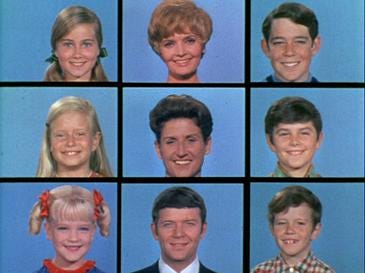
Shit, no. Sorry. My brain always goes there after the words “it’s a story”.
Ahem.
It’s a story involving people like me and my friends playing AD&D, specifically Dragonlance, which gradually morphs into a real-life, D&D-style monster mystery. And that is why my TTRPG books are now being taken down from the shelf on an almost daily basis. Which AD&D module are the characters in my novel playing in January 1986? Which mysteries from games such as Vaesen and Candela Obscura might provide inspiration for the “monster”? Which books and passages were singled out during the Satanic Panic? What would a group of teenagers raised on Dragonlance and the Monster Manual assume was happening when something genuinely inexplicable entered their lives?
All of a sudden, I’m using my collection as a resource for writing a novel.
Admittedly, it isn’t entirely different from using those same books to construct an encounter or campaign. The habits are familiar: taking fragments from different sources, changing them, combining them and asking what might happen next.
There is an important difference, however. A roleplaying campaign is a collaboration. The game master might build the setting and introduce the mystery, but the players decide where the story goes. They make choices you didn’t anticipate, become obsessed with details you thought were unimportant and occasionally wander straight past the carefully prepared adventure altogether.
Writing a novel means making all of those choices myself. There are no players to surprise me, solve the mystery in an unexpected way or force the story down a path I hadn’t considered. Although, given the behaviour of some fictional characters once they begin to take shape, perhaps the difference isn’t quite as great as it appears.
I’m certainly not the first person to draw upon roleplaying games in this way.
Margaret Weis and Tracy Hickman developed the Dragonlance novels alongside the AD&D adventures that introduced Krynn to players. Steven Erikson and Ian C. Esslemont built much of the vast history behind their Malazan novels through years of roleplaying. Raymond E. Feist’s Midkemia also grew from a roleplaying world, while the setting that became The Expanse began life as a game before being transformed into a series of novels.
In each case, the game did more than provide a story waiting to be written down. It created worlds, characters, histories and possibilities that could later be dismantled, reassembled and made into something new.
The same principle extends beyond novels. The Duffer Brothers used D&D throughout Stranger Things not because the creatures stalking Hawkins were literal translations of monsters from the game, but because D&D gave the children a language with which to understand them. When confronted by something impossible, they reached for the monsters and stories they already knew.
That idea is particularly relevant to what I’m attempting. The characters in my novel may not be facing something that stepped directly from the pages of the Monster Manual, but those pages will influence what they think they are facing and therefore what they decide to do about it.
Perhaps that is one of the most fascinating things about roleplaying books. They are designed to help us create stories, but their usefulness doesn’t end when the gaming session does. They can become reference books, historical documents, collections of strange ideas, sources of atmosphere or doorways into stories their original authors could never have anticipated.
So, why do I keep so many TTRPG books when I don’t seem to use them?
Because “use” is a much broader word than it first appears.
Some books reach the table. Some contribute a monster, a location or a rollable table to an entirely different game. Some are read once and then remain on the shelf until the right question brings them down again.
And some wait quietly for years before helping you write the story you always said you were going to write.
Also ... the protagonist is female so it actually is a story of a lovely lady.